
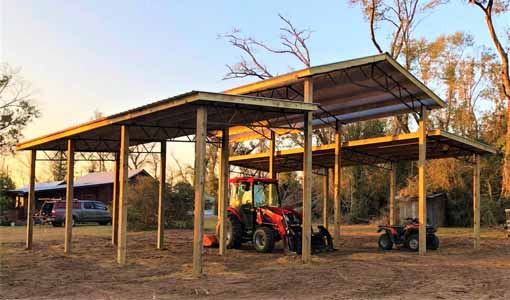
If you need additional storage or want to add a genuine rustic touch to your home, building a pole barn might be the perfect solution. These versatile structures can serve various purposes, from housing agricultural equipment to functioning as offices or living spaces.
Table of Contents
What is a pole barn?
Pole barns are structures built using large poles or posts as their primary supports, which are typically buried in the soil or placed on concrete footings for foundation stability. The roof is often made of steel supported by these poles, giving the building an airy, open appearance.
Commonly used for agricultural storage, pole barns can house items like hay, livestock, or farm equipment. They are also an affordable solution for those needing storage buildings, garages, workshops, or even residential spaces. The flexible design of pole barns makes them an appealing choice for various needs.
One of the major benefits of pole barn construction is its low cost and quick assembly. By eliminating the need for traditional foundations or complex framing, pole barns can be constructed rapidly and at a significantly lower price than conventional buildings. Additionally, their open layout allows for easy utilization of interior space.
Common sizes of pole barns
Pole barn structures have become an economical and adaptable construction option, commonly used for agricultural purposes, storage, workshops, or even living quarters. The size of a pole barn will often depend on its intended use. Here are some common sizes:
- 30×40 Feet: This size provides ample space for workshops, storage units, or small living quarters. Its flexibility makes it suitable for various homeowner needs.
- 40×60 Feet: This versatile size is ideal for large storage needs, workshops, or garages that can accommodate multiple vehicles. It offers sufficient space and can be fully customized with features like insulation, electricity, and plumbing systems.
- 50×100 Feet: Often used for commercial purposes such as agricultural buildings, warehouses, or workshops, this size provides extensive storage space and can easily adapt to various requirements.
Other popular sizes include 36×48 feet, 24×32 feet, and 42×60 feet. These options offer multiple choices to meet specific needs. Pole barns can also be customized to your exact measurements, providing endless possibilities for creating the perfect structure for your requirements.
Small-sized pole barns for storage or workshops
Small-sized pole barns are an economical and versatile solution for storage or workshop needs. These structures are cost-effective, durable, and easy to build, making them a popular choice for many. Their simplicity and adaptability allow them to be tailored to specific requirements and preferences. Small pole barns are ideal for storing heavy equipment, construction materials, and other items, offering both durability and ease of construction.
Medium-Sized Pole Barns for Equipment Storage
Medium-sized pole barns are essential for housing equipment that won’t fit inside a standard garage, such as tractors, RVs, or boats. These barns provide protection from the elements and offer an affordable way to expand your storage capacity without excessive spending. With customizable dimensions and designs, it’s easy to create a pole barn that meets your specific storage needs. Investing in a medium-sized pole barn ensures that your equipment will remain protected for many years to come…
Large Pole Barns for Agricultural and Commercial Use
Large pole barns have long been favored by agricultural and commercial entities due to their flexibility and cost-effectiveness. These structures offer ample storage space for machinery, equipment, and products, making them an ideal solution for companies needing additional space. Large pole barns enable businesses to quickly expand their capacity for operations or merchandise storage. Additionally, constructing quality pole barns is faster and more cost-efficient compared to traditional building methods, saving both time and money.
Customized Pole Barns for Specific Needs
Most pole barn companies offer customized options to meet specific dimension requirements, ensuring your workshop or storage needs fit precisely within its walls. Customized designs allow for the maximum use of available space, whether creating an office environment for small workshops or providing ample room for a large storage facility. Custom pole barn constructions can be tailored to your exact dimensions, ensuring all your specific needs are covered.
Multi-Purpose Pole Barns for Versatile Use
Some pole barns are designed to serve multiple functions simultaneously. These versatile structures can accommodate living quarters, office space, and additional storage solutions all in one. Multi-purpose barns are ideal for individuals or companies that require both living space and storage within a single building, providing a practical and efficient solution.
Open-Sided Pole Barns for Easy Access and Air Circulation
Open-sided pole barns are an attractive solution for ranchers and farmers seeking shelter for equipment or livestock. These structures have at least one open side, allowing
Lean-To Pole Barns for Cost-Effective Storage Expansion
Lean-to-pole barns are extensions from existing structures that provide extra storage space without the cost and effort involved with creating an entirely separate one. Often utilized for vehicle, equipment, or livestock storage. Lean-tos can easily fit in garages, barns, and houses as an efficient means to expand storage capacity without incurring significant additional expenditure in terms of building costs for an entirely separate structure.
Factors to consider when choosing a pole building size
Selecting the right size for your pole barn can be challenging, as various factors need to be considered to make an informed decision that ensures comfort and convenience. Here are some key aspects to keep in mind:
- Purpose of the Pole Barn
The foundation of a successful project lies in careful planning. Before construction begins, clearly define the goal of your pole barn. Whether it’s for housing livestock, storing equipment, or serving as a workspace, understanding your requirements is crucial. Consider potential future expansion to ensure your pole barn can adapt to changing needs. - Layout and Design
Think about the layout of your pole barn to optimize space usage and ensure a smooth workflow. Whether you plan to add storage lofts or designate specific zones for different purposes, a thoughtful design is essential for successful construction.
By carefully considering these factors, you can choose a pole barn size that meets your current needs while allowing for future flexibility and efficiency.
- Ensuring Quality in Pole Barn Construction
Building a pole barn requires a blend of artistry and precision. While you might consider constructing the shell yourself, it’s often wise to hire experienced professionals specializing in pole barn construction. Custom pole barn construction, based on fully engineered, site-specific plans, ensures that your structure meets industry standards and local building codes. A skilled team can expedite the construction process and minimize the risk of costly errors.
When selecting a builder, thoroughly check their credentials and review references from previous projects. If a contractor promises to start work immediately, it may be a red flag indicating potential issues or an unusually low price that could signal a scam. Always verify contractors carefully.
Discuss their use of the latest technologies, such as construction software, project collaboration tools, estimates, and submittals, to ensure they are equipped to deliver a high-quality project. - Selecting Materials for Durability and Aesthetics in Pole Barn Construction
The choice of materials is crucial in determining the durability and appearance of your pole barn. Consider various options for poles, trusses, and roofing materials, factoring in the climate, intended use, and budget constraints.
Opting for weather-resistant and durable materials will ensure your pole barn stands the test of time with minimal maintenance. Additionally, consider the environmental impact of your materials and explore sustainable alternatives that align with your values and long-term goals.
Using high-quality materials not only strengthens the pole barn’s structure but also enhances its aesthetic appeal and resistance to the elements. This thoughtful selection process contributes to a durable, attractive, and environmentally responsible pole barn.. - Design and Engineering: The Heartbeat of Your Pole Barn
The design and engineering phase is crucial in shaping the architecture of your pole barn. Collaborate with professionals to create a design that seamlessly blends practicality with aesthetics. Precise structural design not only enhances the appearance but also ensures the structural integrity of the pole barn, especially in areas prone to extreme weather.
Consider using modern design software and technologies to produce 3D models, providing a more immersive preview of the final structure. Maintain constant communication with your pole barn design team to ensure that the finalized designs meet your expectations while adhering to safety and regulatory requirements. This collaborative approach will result in a well-designed, structurally sound pole barn that satisfies both functional and aesthetic needs. - Laying a Solid Foundation for Your Pole Barn
The foundation is the cornerstone of any construction project, and pole barns are no exception. Explore various foundation options and select one that suits your specific needs. Whether opting for traditional concrete pads or modern solutions like helical anchors, choosing the right foundation ensures durability and stability.
Consider the soil composition and load-bearing requirements when determining the type of foundation. Consult with structural engineers to evaluate the best anchoring strategies, taking into account soil stability and potential seismic activity. A strong foundation not only supports your pole barn structure but also protects against shifting and structural issues over time. - Effective Insulation: The Key to Comfort and Efficiency
Beyond structural considerations, the comfort and functionality of your residential or commercial pole barn depend on effective insulation. Depending on the building’s purpose, consider ways to control temperature and reduce energy costs.
Proper insulation not only enhances the quality of life within the space but also provides long-term savings. Evaluate insulation materials based on their R-value, ensuring they meet or exceed local building codes for energy efficiency.
Additionally, consider factors such as moisture resistance and fire-retardant properties to enhance the security and longevity of the insulation. A well-insulated pole barn can maintain an ideal climate year-round, making it suitable for various uses. - Construction Time Frame: Planning for Success
Time is a critical factor in any construction project. Set a realistic timetable, considering weather conditions and potential delays. A well-planned construction schedule streamlines the process and allows for contingencies, ensuring your barn is completed within the specified time frame.
Take seasonal factors into account when planning your schedule, as weather patterns can significantly impact the construction timeline. Maintain regular communication with your building team to promptly address and resolve unexpected challenges, avoiding unnecessary delays. This proactive approach ensures a smooth and timely construction process. - Budget Constraints: Planning for Financial Success
Finances are central to any project, making meticulous budgeting essential. Include all expenses, from labor and materials to potential unforeseen circumstances. A clear budget helps prevent unexpected financial costs and supports informed decision-making throughout your pole barn construction.
Create a budget with a reserve for unexpected costs to ensure you have the financial capacity to handle any issues without compromising the quality of your project. This proactive financial planning ensures a smooth and successful construction process.
Customizable Dimensions and Options of Pole Barns
When purchasing a pole barn for your property, having customizable dimensions and options can be highly beneficial. Custom sizing allows you to fit the barn perfectly into your available space, enhancing functionality. Various siding and roofing materials, window styles, and door designs offer design flexibility to suit individual tastes and requirements. This customization ensures that the structure meets all your needs while adding curb appeal to your property’s overall appearance. Try our 3D Pole Barn Designer Tool as a visual guide.
Ability to customize the size and layout of a pole barn
Flexibility in building pole barns is invaluable for meeting individual needs and requirements. Users can tailor the dimensions to fit the available space on their property and customize the layout to suit their specific purposes. Whether it’s for storing equipment, housing animals, creating workshops, or providing versatile spaces, the ability to adjust dimensions and layouts ensures that the structure perfectly matches these demands. This customization results in unique structures that effectively serve a wide range of purposes, providing maximum functionality and efficiency.
Adding features such as doors, windows, or insulation
Installing doors, windows, and insulation in a pole barn involves careful planning, design, layout, and installation, which can be both costly and time-consuming. Each component requires thoughtful consideration:
- Windows: Must be properly sealed to ensure security and energy efficiency.
- Doors: Need to be strategically placed and installed for optimal functionality and access.
- Insulation: Essential for maintaining optimal indoor temperatures and energy efficiency.
Additionally, obtaining necessary permits and approvals can add to the cost and timeframe. Despite these challenges, incorporating these features is a worthwhile investment, significantly enhancing the practicality and comfort of living or workspaces within the pole barn.
Final Thoughts
Pole barn sizes can vary greatly based on individual needs or company preferences, whether for storage buildings or expansive agricultural structures. There are options available to meet a wide range of dimensions and space requirements. Check out our Ultimate Pole Barn Guide for More information and Helpful Tips and Tricks. It’s important to carefully evaluate your specific needs and consult with knowledgeable advisors, such as Keen’s Buildings, before making any final decisions. This ensures that you select the barn dimensions that best fulfill your requirements efficiently and effectively.